
01
Event Introduction
To broaden students' academic horizons and further stimulate rational thinking and innovative spirit, Hongde College recently held the 100th to 102nd sessions of the Mentor Micro-Salon. The event aimed to help students better understand the prospects and development trends of various disciplines within the college. The college specially invited several experts and scholars from relevant fields to give engaging lectures and have in-depth discussions on hot topics with the students, helping them make choices that are better suited to their future career paths.
02
Activity Process
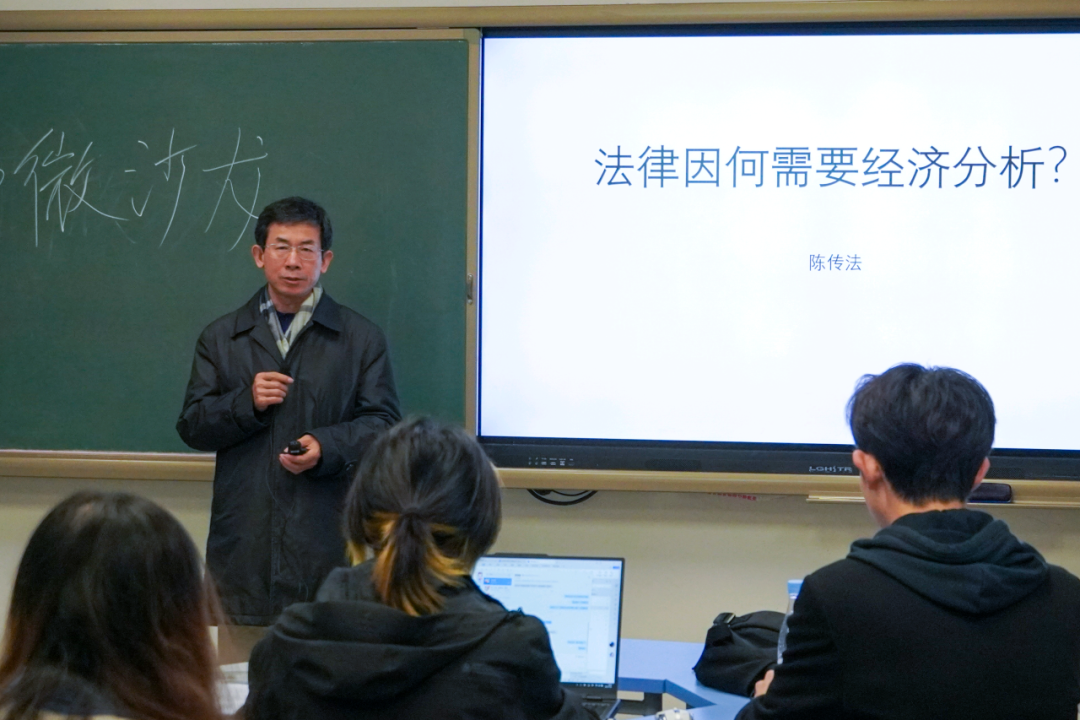
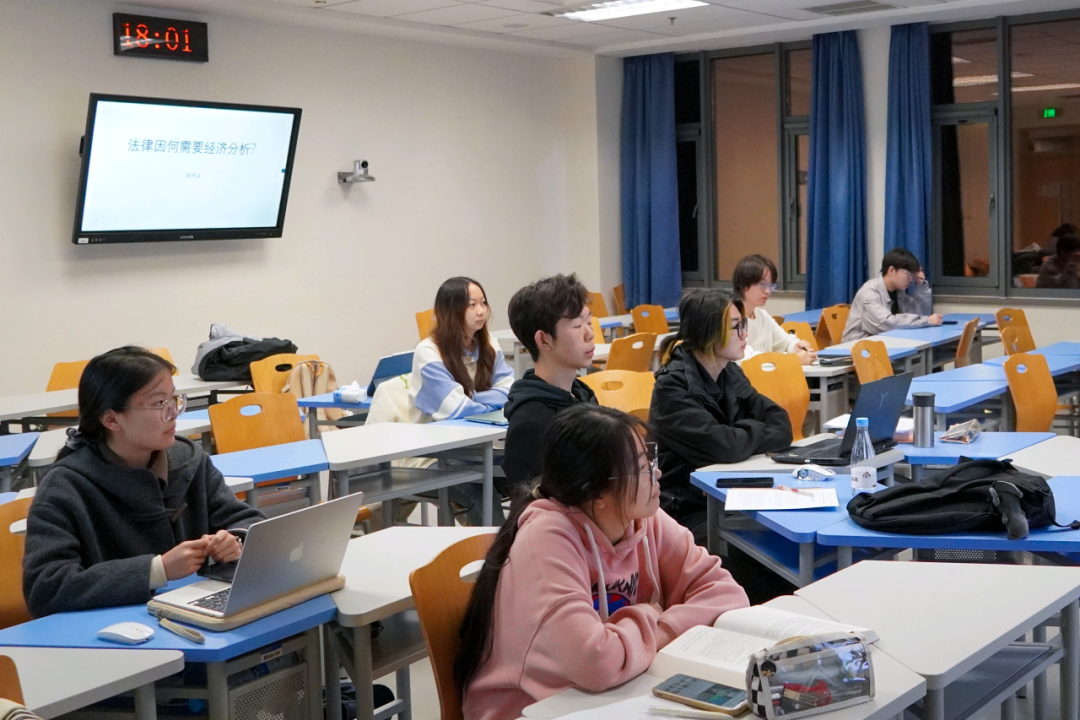
Issue 100: Why Law Needs Economic Analysis
Professor Chen Chuanfa starts from familiar everyday scenarios and explains the definition of law and economics analysis and the application of economic methods in the field of law with straightforward logic. First, Professor Chen elaborates on the connotation of law and economics analysis while also outlining the development trajectory of applying economic methods to legal interpretation. Then, he uses life examples to provide an in-depth explanation of the core characteristics of economic methods. Next, from the perspectives of understanding the law, applying the law, and improving the law, Professor Chen illustrates the practical benefits of economic analysis for legal professionals. Finally, addressing common criticisms of economic analysis, Professor Chen offers rebuttals: he responds to the view that economic analysis excessively pursues efficiency at the expense of fairness by emphasizing its complementarity with the value of legal fairness; he also proposes solutions to the difficulty of quantifying legal issues, demonstrating the advantages of economic analysis methods and deepening the students' understanding further.
Issue 101: Polymer Solar Cells and Devices
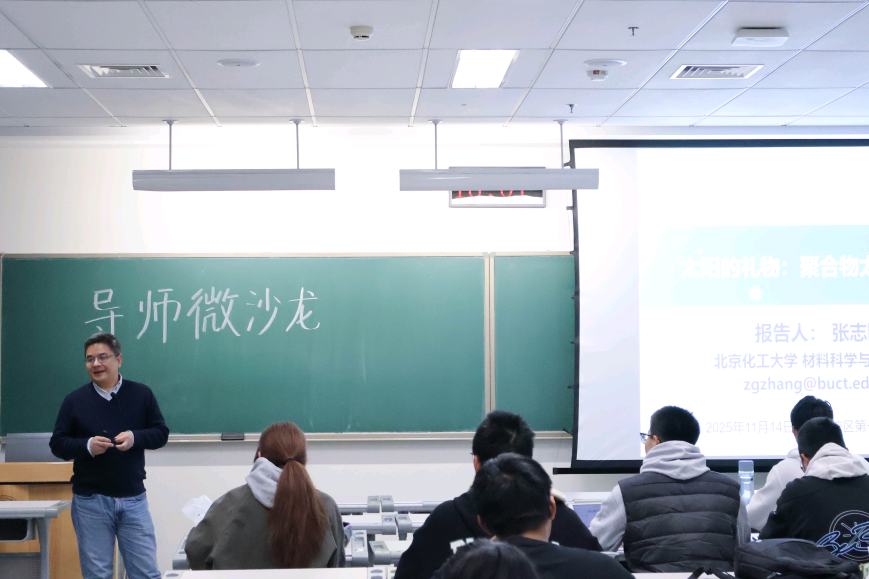
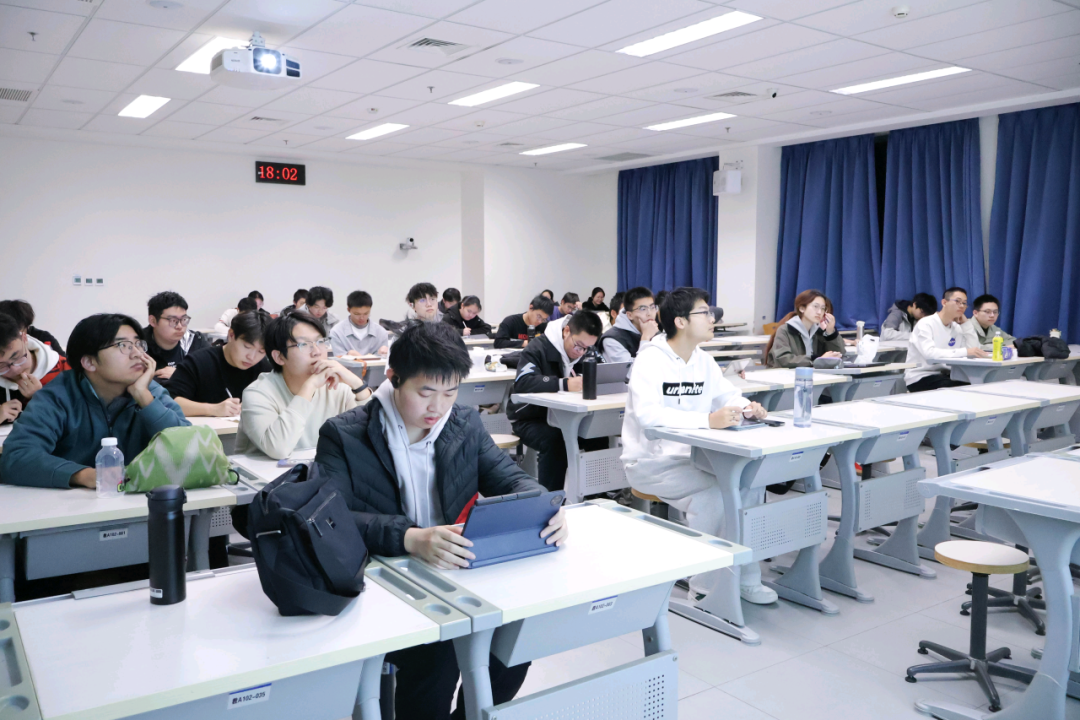
In the mentor micro-salon on 'Polymer Solar Cell Materials and Devices,' Professor Zhang Zhiguo systematically introduced this cutting-edge field to the students. He began by addressing the high costs and pollution issues of traditional crystalline silicon cells, highlighting the potential of polymer semiconductor materials as an alternative. By tracing the development of organic polymers from insulators to semiconductors, he demonstrated the scientific foundation of this technology. Professor Zhang further explained the scientific essence of the research, including how to use coating, printing, and annealing processes to control molecular arrangement and crystallization on the nanoscale, overcoming key challenges such as high electrode resistance and efficiency degradation. At the same time, he envisioned the unique advantages of polymer materials in emerging applications like wearable electronics and building-integrated photovoltaics, emphasizing their 'lightweight, thin, and stretchable' properties. During the interactive session, students engaged in in-depth discussions with the professor on the device operating mechanisms, self-healing functions, and approaches to approaching the 33% theoretical efficiency limit. This event vividly demonstrated that polymer solar cell materials represent an innovative field filled with scientific ingenuity, from molecular design to process control.
Issue 102: The Essential Path to Sustainable Development:
Clean Production, Ecological Industry, and Circular Economy
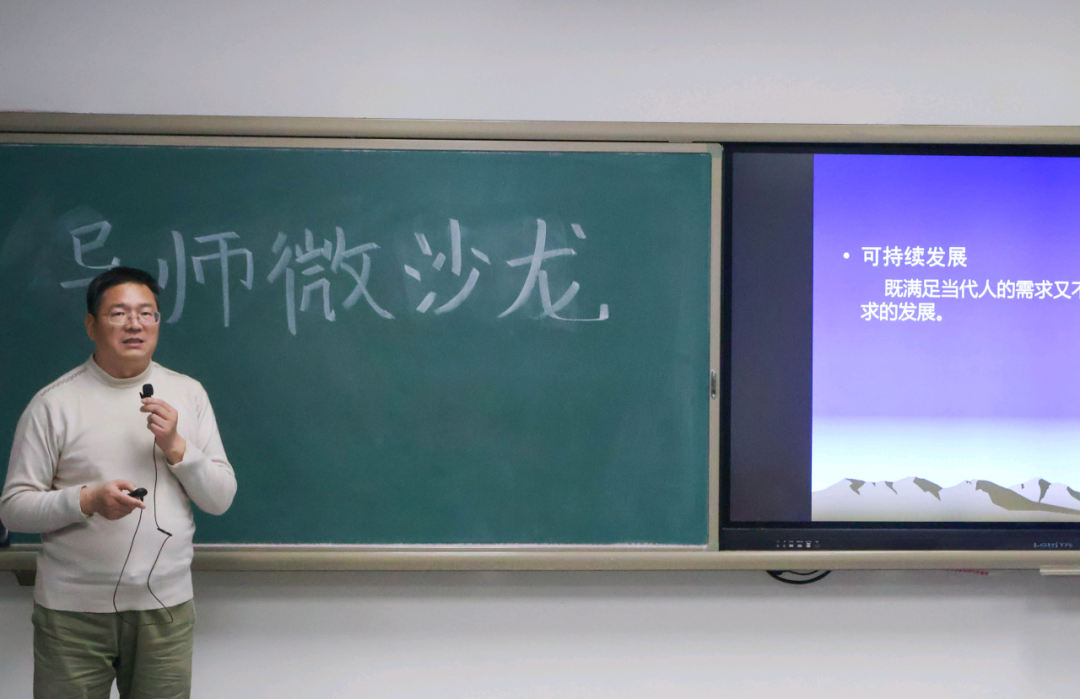
Teacher Yuan Jiongliang approached the topic from the perspective of sustainable development, pointing out that global resources and energy reserves are under pressure and that environmental issues still require attention. To improve the current situation, he focused on the concept of vigorously developing clean production, emphasizing the plan to build an ideal industrial ecosystem, where byproducts generated within the system's factories are internally reused and transformed through multi-level production processes to increase resource utilization efficiency. In addition, he introduced the relevant processes of a circular economy, continuously improving the system structure according to the 3R principle: 'Reduce - Reuse - Recycle.' Finally, during the interactive session, Teacher Yuan patiently answered students' questions and encouraged them to maintain their thirst for knowledge, be brave in innovation along the path of development, and pursue holistic growth.
03
Student feedback
Attending the 100th Mentor Micro-Salon at Hongde Academy, Teacher Chen Chuanfa's sharing gave me a more multidimensional understanding of law. The teacher first challenged the one-sided view that 'law is only responsible for justice, efficiency, and nothing else'—in reality, where resources are limited, the implementation of justice also requires social resources, and efficiency is inherently one of the values of law. Modern economics' explanatory power over human behavior happens to cover the objects of legal regulation, which makes the logic of 'law cannot be separated from economic analysis' clearer. In just one short salon, I got a glimpse of the intersection between law and economics, and I also understood the significance of an interdisciplinary perspective for professional learning.
— Li Yuxiao, Law Practice 2401
I was fortunate to attend Professor Zhang Zhiguo's lecture on polymer solar cells, which was highly inspiring. Professor Zhang vividly illustrated the broad prospects of photovoltaic technology in the context of the nation's 'dual carbon' strategy, particularly emphasizing the advantages of polymer solar cells in terms of flexibility and low cost. He shared insights on polymer material design and Lewis acid-catalyzed synthesis methods, showcasing the power of scientific innovation. As a student in science and engineering, I not only gained a deeper understanding of clean energy materials but was also deeply influenced by Professor Zhang's rigorous academic attitude and sustained passion for research. This micro-salon sparked my interest in the field of new energy and strengthened my determination to apply what I have learned to the nation's green development.
— Youpei 2402, Zhou Xiangchuan
I was fortunate to attend Associate Professor Yuan Jiongliang's lecture on cleaner production, ecological industry, and circular economy, and I was deeply inspired. The lecture systematically explained the path from the concept to the practice of sustainable development, making me realize the limitations of the traditional linear development model and the urgency of transitioning to a green, circular, and low-carbon model. Cleaner production reduces pollution at the source, ecological industry builds industrial symbiosis networks, and circular economy achieves closed-loop resource flows. Together, these three form a systemic solution for sustainable development. This learning experience not only deepened my understanding of green development theory but also motivated me to actively explore ways to combine technological innovation with environmental friendliness in my future professional studies, contributing my youth to the path of sustainable development with Chinese characteristics.
— Base A2502, Wan Xinlu